




Supreme Court Ruling Redefines Rights for Hemp-Derived CBD/THC Consumers and Gun Ownership
Supreme Court Decision Shifts Legal Landscape for Hemp-Derived CBD/THC Consumers
The Supreme Court's unanimous ruling in United States v. Hemani marks a pivotal moment for cannabis consumers-especially those using hemp-derived CBD or THC products. In a decision issued June 18, 2026, the Court held that federal law cannot categorically disarm individuals who use cannabis unless there is evidence they are dangerous or incapacitated. This nuanced judgment reshapes the legal risk profile for many hemp-derived product shoppers.
Disclaimer: This article is for informational purposes only and does not constitute medical, legal, or financial advice.
How the Hemani Ruling Alters Federal Gun Restrictions for Cannabis Users
The Court found that the blanket prohibition under 18 U.S.C. §922(g)(3)-which bars firearm possession by "unlawful users of controlled substances"-fails the Second Amendment test when applied to moderate cannabis users without individualized proof of danger or impairment. Justice Gorsuch emphasized that historical analogues exist only for individuals so impaired they were "incapable of managing their affairs," not for occasional or mild users.
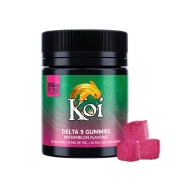
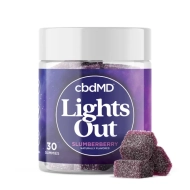
This sets a precedent: hemp-derived CBD/THC consumers who use products occasionally, such as a mild gummy for sleep, may not automatically lose their gun rights-unless the government can prove they pose a risk.
Consumer Confidence and Market Behavior: A New Era
For hemp-derived CBD/THC shoppers, this ruling reduces a significant legal stigma. Many consumers hesitated to use intoxicating hemp products out of fear of losing Second Amendment protections-even in states where cannabis use is legal. Now, average users may feel more secure, potentially increasing demand for mild hemp-derived products.
Retailers and brands may respond by highlighting compliance and moderate use in their marketing. Shoppers might gravitate toward products marketed for wellness or occasional use-like microdose gummies-rather than high-potency concentrates, aligning with the ruling's emphasis on non-impairment.
Regulatory Implications for Hemp-Derived Product Labels and Messaging
Although the ruling does not alter federal scheduling or THC limits, it pressures regulators and brands to clarify usage guidance. Labeling that emphasizes low-dose, non-impairing formats may become more than marketing-it could be a legal safeguard for consumers concerned about firearm rights.
This aligns with the ongoing shift toward a "total THC" standard set to take effect November 2026, which caps total THC per container and targets high-potency products. Hemp-derived CBD/THC sellers may pivot to formats that clearly stay within low-dose thresholds.
Legal Patchwork and State-Level Variability
While the ruling addresses federal law, it does not override state gun regulations or cannabis policies. Hemp-derived product consumers must still navigate a patchwork of state rules regarding both cannabis use and firearm possession. In some jurisdictions, state law may still restrict firearm rights for cannabis users, even if federal law no longer does.
This reinforces the importance of context-specific guidance and product selection. Consumers in states with restrictive policies may favor products that emphasize non-intoxicating use or CBD-only formulations.
Strategic Moves for Brands and Retailers in the Wake of the Ruling
- Highlight low-impairment formulations and usage guidance in product descriptions.
- Feature microdose or mild products-such as nama Anytime Microdose gummies-in visible displays, reinforcing compliance and consumer peace of mind.
- Educate staff in dispensaries and shops-such as Shop Hemp Wellness Products | Buy Online | Chow420-about the ruling's limits and applicability.
- Link to trusted resources like the ChowIndex: Brand & Product Rankings to help shoppers compare low-dose hemp offerings.
- Use internal anchors like nama Anytime Microdose 20-count and nama Anytime Microdose 10-count to showcase product options aligned with the ruling's safe-use profile.
FAQ
- Q: Does this ruling mean all cannabis users can own guns?
- A: No. The ruling applies only to users who are not shown to be impaired or dangerous. Addicts or individuals currently intoxicated may still be restricted.
- Q: Can I cite this ruling if stopped under state law?
- A: This decision pertains to federal law. State laws may still impose restrictions, so consult local guidance before relying on it.
- Q: Should I choose low-THC hemp products now?
- A: If firearm rights are a concern, opting for mild or non-impairing formats may reduce legal risk and align with the Court's reasoning.
- Q: Will brands need to update labels after this ruling?
- A: While not required, updating labels to emphasize moderate use, dose, and impairment guidance may benefit both compliance and consumer trust.
Looking ahead, hemp-derived CBD/THC consumers and brands are entering a more nuanced legal era. As federal gun restrictions relax for non-impairing users, the market may shift toward more transparent, low-dose offerings-reshaping product strategy, retail messaging, and consumer confidence in subtle but meaningful ways.
Shop What You Just Read About
Every product is COA-verified and blockchain-anchored on Chow420.