




How the 2026 Federal Hemp Redefinition Threatens Hemp-Derived THC Shopping
How the 2026 Federal Hemp Redefinition Threatens Hemp-Derived THC Shopping
A sweeping federal redefinition of hemp, set to take effect on November 12, 2026, is poised to eliminate the vast majority of hemp-derived THC products currently available. This change not only rewrites the legal boundaries for cannabinoids like delta-8, THCA, and even some CBD items but also forces consumers and retailers to rethink sourcing, product offerings, and compliance strategies.
Disclaimer: This article is informational only and does not constitute medical or legal advice.
Federal "Hemp Cliff" and Retail Shake-Up
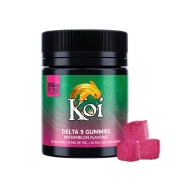
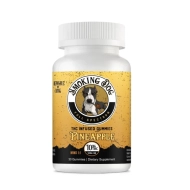
The new law narrows the federal definition of hemp by imposing a strict "total THC" threshold-capping products at 0.4 milligrams of combined THC per container, and redefining hemp by total THC percentage under 0.3% dry weight. Most intoxicating hemp products-including gummies, beverages, and synthetic cannabinoids-will no longer qualify and will be federally prohibited after the November deadline.
Retailers in convenience stores, pop-up dispensaries, and online platforms face a dramatic loss of inventory as thousands of SKUs become noncompliant. High-potency edibles and THC beverages, once major growth drivers, will vanish unless reform occurs.
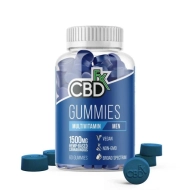
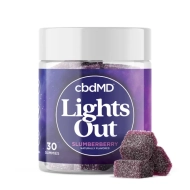
Meanwhile, CBD-only products that truly contain negligible THC may still comply, but the new standard heightens the risk of noncompliance due to trace contamination. Retailers must now scrutinize Certificates of Analysis (COAs) more closely than ever.
Supply-Chain Pressure and Reform Urgency
The looming change has set off alarm bells across the $28 billion hemp-derived cannabinoid sector. Manufacturers, distributors, and retailers are scrambling to reformulate, down-dose, or pivot to hemp fiber and industrial products to survive.
Trade groups and industry advocates are pushing back, lobbying for regulatory frameworks rather than outright bans. Legislation like the proposed HEMP Act aims to establish dosage caps and age limits, offering a path to preserve the intoxicating hemp category under regulated access.
Consumer Behavior and Market Access
For consumers who rely on hemp-derived THC for wellness, pain, or sleep, the change threatens to cut off access to familiar products. Many report substituting these products for pharmaceuticals-restrictions may push them back toward conventional medications or illicit markets.
At the same time, state-legal cannabis programs may benefit as consumers migrate to regulated dispensaries. In markets with mature medical or recreational systems, the impact may be less severe-but in hemp-centric states, disruption will be profound.
Strategic Retail Responses and Chow420 Integration
- Retailers must prioritize Shop Hemp Wellness Products | Buy Online | Chow420 that meet the new threshold-focusing on low-THC and CBD-only offerings.
- Highlight reformulated options like those listed under Tillmans Tranquils Blueberry Cheesecake Delta 9 THC Syrup or Tillmans Tranquils Pink Lemonade Syrup-if reformulated to comply.
- Link to broader discovery via ChowIndex: Hemp Product Directory and ChowIndex: Brand & Product Rankings to guide customers toward compliant alternatives.
- Use internal guides like Is CBD Legal? (State-by-State) and Hemp State Laws (State-by-State) to help customers understand regional variations in availability and enforcement.
Frequently Asked Questions
- Q
- How will the 0.4 mg THC cap per container affect my favorite gummies?
- A
- Most gummies today contain far more than 0.4 mg total THC. Unless reformulated, they will become federally unlawful after November 12, 2026.
- Q
- Can I still buy Delta-8 or THCA products in states where they are currently legal?
- A
- No-regardless of state law, products exceeding the new federal limits will be Schedule I controlled substances under federal law.
- Q
- What options do retailers have to remain compliant?
- A
- Retailers should pivot to truly low-THC or CBD-only products, reformulate offerings, and engage in advocacy for regulatory alternatives.
- Q
- Will CBD-only products still be legal?
- A
- Yes-provided they contain negligible THC and comply with the total-THC cap and hemp definition under the new law.
- Q
- Could state-legal cannabis programs fill the gap?
- A
- Yes-in states with mature medical or recreational markets, consumers may shift to regulated dispensaries for similar products.
As November 12, 2026 approaches, the hemp-derived THC category stands at a crossroads. Retailers, consumers, and advocates must navigate reform, compliance, and political engagement. The next year will determine whether this sector adapts, transforms, or disappears under federal pressure.
Shop What You Just Read About
Every product is COA-verified and blockchain-anchored on Chow420.