




Iowa's Hemp-Derived THC Limits Meet Legalization Push: What Shoppers Should Know
Iowa's Hemp-Derived THC Limits Meet Legalization Push: What Shoppers Should Know
When Rob Sand, Iowa's Democratic candidate for lieutenant governor, argued that cannabis should be regulated like alcohol-with age limits, packaging safeguards, marketing restrictions, and taxation-he spotlighted the tension between state-level legalization efforts and Iowa's already stringent hemp-derived THC rules. This collision of policy and politics could reshape how hemp-derived CBD/THC shoppers in Iowa navigate the market.
Disclaimer: This article is for informational purposes only and does not constitute medical or legal advice.
How Iowa's Strict THC Caps Shape the Current Market
Iowa's consumable hemp law, House File 2605, imposes tight limits on THC in hemp-derived products: no more than 4 mg per serving and 10 mg per container, alongside a 0.3 % dry-weight THC cap. Synthetic cannabinoids and smokable or vape products are banned entirely. These rules have drastically narrowed the range of available hemp-derived THC goods in the state. The current framework is enforced by the Alcoholic Beverages Division and has significantly shrunk the gray-market footprint, compared to neighboring states.
Meanwhile, under Iowa's broader hemp law, CBD products with up to 0.3 % THC remain legal without a medical card, though medical CBD containing higher THC is restricted to registered patients. Iowa also prohibits THC or CBD in alcoholic beverages.
Legalization Talk Meets Regulatory Reality
Sand's proposal to treat cannabis like alcohol-allowing regulated sales, packaging safeguards, and taxation-stands in stark contrast to Iowa's current hemp-derived THC regime. His plan, pitched as a way to curb cross-border purchases in Missouri, Illinois, and Minnesota and boost state tax revenue, could pave the way for broader product access. However, it would require dismantling or revising HF 2605's potency limits, packaging restrictions, and bans on inhalable formats.
Consumer Behavior and Supply Chain Ripples
- Shoppers seeking higher-potency or inhalable hemp products may continue sourcing them from neighboring states or online, fueling out-of-state tax gains.
- Local retailers face uncertainty: will they invest in expanding product lines if the legal regime remains restrictive, or pivot toward non-THC CBD, topicals, or licensed medical products?
- Producers and distributors may hesitate to scale operations without clarity on whether Sand's vision-or a similar reform-could create a more flexible regulatory environment.
Retail Strategy and Brand Positioning Under Strain
Brands operating in Iowa must navigate a patchwork of rules that restrict THC potency, ban inhalables, and limit product formats. A legalization shift could open new opportunities-but also demand rapid adaptation in labeling, testing, age verification, and taxation systems. Companies may need to reevaluate product formulations, invest in child-resistant packaging, and prepare for new licensing structures.
What This Means for Iowa Hemp-Derived Shoppers
For now, shoppers must contend with:
- Limited product choices-edibles and tinctures only, with strict THC caps.
- Uncertainty on future access-legalization could expand options or spark new restrictions during transition.
- Potential price shifts-taxation and regulation may increase costs or, conversely, undercut illicit-market premiums.
Where You Can Shop Today
- Shop Hemp Wellness Products | Buy Online | Chow420 for compliant CBD and low-THC options.
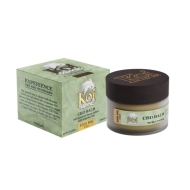
- Check out Shop Best-Selling Foy | Buy Online | Chow420 or Shop Koi Products | Buy Online | Chow420 for trusted CBD formulations under the legal THC limit.
- Explore detailed offerings like nama Anytime Microdose Gummies or nama Euphoria Buzz Packs-both crafted to adhere to Iowa's serving-size laws.
- For broader context on brands and retailers, refer to the ChowIndex: Hemp Product Directory and ChowIndex: Hemp Businesses in Iowa.
Frequently Asked Questions
- Q Can I legally buy vapeable hemp-derived THC in Iowa?
- No. Inhalable hemp products-vape cartridges, pre-rolls, cigarettes-are prohibited under Iowa law, even if they contain under 0.3 % THC.
- Q Do I need a medical card to purchase hemp-derived CBD products?
- No. CBD products with 0.3 % THC or less are legal for adult consumers without a medical card. Only medical CBD with higher THC requires registration.
- Q How might Sand's proposal change product availability?
- If enacted, his plan could open regulated access to higher-THC formats, inhalables, and broader retail types, but would require legislative overhaul of current caps and bans.
- Q Will taxation make hemp-derived THC more expensive?
- Possibly. While taxes could raise prices, they might also reduce illicit market demand and fund regulatory infrastructure that ensures safer products.
- Q Should I expect price drops or new products soon?
- Not immediately. Until laws change, product variety and pricing will remain constrained by existing THC caps and format bans.
As Iowa's legalization debate unfolds, shoppers and retailers alike should monitor legislative developments closely. A shift toward alcohol-style regulation could unlock new formats, higher potency, and expanded retail models-but for now, Iowa's hemp-derived THC market remains tightly bound by strict limits and legal complexity.
Shop What You Just Read About
Every product is COA-verified and blockchain-anchored on Chow420.