




Does Indica or Sativa Make You Tired?
The short answer: indica is marketed as sedating and sativa as energising, but the labels are a weak predictor of whether a product will make you tired. Dose, the presence of CBN, the terpene profile, and what time you take it all matter more than which of the two words is on the package.
Where the indica/sativa split came from
Indica and sativa began as botanical descriptions of plant shape and origin — short, bushy, broad-leaved plants from Central Asia versus tall, narrow-leaved plants from equatorial regions. Over the last century of breeding almost everything on sale is a hybrid, and the names have become marketing shorthand: "indica" for couch-lock and sleep, "sativa" for energy and focus.
The problem is that chemistry does not follow the label. Analyses of commercial cannabis samples — including work published in Nature Plants in 2022 by Watts and colleagues — have found that the indica/sativa designation explains very little of the variation in cannabinoid or terpene content. Two "indicas" can differ more from each other than from a "sativa".
What actually predicts drowsiness
| Factor | Effect on tiredness | Evidence |
|---|---|---|
| Dose of THC | Higher doses are more sedating for most people; low doses can be alerting | Well established; biphasic dose response |
| CBN | Commonly marketed for sleep; modest evidence | Limited human data, mostly small studies |
| Myrcene (terpene) | Associated with sedation in folk usage | Animal data; human evidence thin |
| Timing and setting | Evening use in a quiet room reads as "sedating" regardless of strain | Obvious but frequently overlooked |
| Indica vs sativa label | Weak, inconsistent | Poor correlation with measured chemistry |
The dose effect is the one that matters
THC has a biphasic relationship with alertness. At low doses many people report mild stimulation or heightened focus; at higher doses sedation dominates. A 2.5 mg edible from a product labelled "indica" may leave you more awake than a 15 mg edible labelled "sativa". If tiredness is what you want to avoid, dose is the lever — see our microdose collection.
CBN and the sleep market
CBN (cannabinol) is a minor cannabinoid that forms as THC degrades. It is widely marketed for sleep, and products combining THC with CBN are common — we list 72 products with a measured CBN reading as of September 2026. The honest state of the evidence: CBN is mildly sedating in animal studies, human trials are small and mixed, and the strongest human findings involve CBN combined with THC rather than alone. If a product is labelled for sleep, the CBN and THC lines on the certificate of analysis tell you more than the strain word.
Terpenes: promising, unproven
Myrcene, linalool and caryophyllene are the terpenes most often linked to relaxation; limonene and pinene to alertness. The mechanism is plausible and there is animal evidence, but well-controlled human studies of terpene effects at the concentrations found in cannabis are scarce. Treat terpene-based claims as reasonable hypotheses rather than settled fact. Where a laboratory tested terpenes, the profile is on the certificate.
Why the label persists anyway
If the chemistry does not support the split, why does every dispensary and every brand still use it? Partly habit — the vocabulary is a century old and consumers ask for it. Partly because it is useful as a rough sorting tool at the point of sale, even when it is unreliable at the level of an individual product. And partly because expectation is a real component of the experience: a person who takes something labelled "indica" at 10pm expecting to feel sleepy is, on average, more likely to report feeling sleepy. None of that makes the label a good predictor of what is in the product.
Some producers have moved to describing products by their dominant terpenes or by measured cannabinoid ratios instead. That is a better system. Until it is universal, the practical approach is to treat the strain word as a hint and the certificate of analysis as the fact.
Edibles versus flower on this question
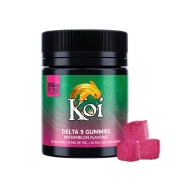
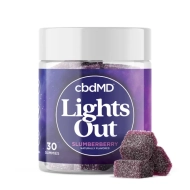
The strain label is least meaningful on edibles. Most gummies and drinks are made from distillate, which has been refined to a single cannabinoid and has had its terpenes stripped and often replaced. An "indica gummy" is, chemically, THC plus whatever terpene blend the manufacturer chose to add back. On flower the label at least corresponds to a real plant with its own terpene profile; on an edible it is almost pure marketing. If you want a sedating edible, the CBN figure and the THC dose are the lines to read.
A practical approach
- Decide the dose first. Low for daytime, higher for evening.
- Read the certificate for THC, CBN and any terpene results rather than trusting the strain word.
- Note the time of day. Everything is more sedating at 10pm.
- Try one product several times before judging it; day-to-day variation is real.
We list 28 flower products and 126 gummies as of September 2026, each with the strain designation shown alongside the measured cannabinoid figures so you can compare both. Browse by indica, sativa or hybrid.
Frequently asked questions
Does indica make you sleepy?
Products labelled indica are marketed that way, but the label does not reliably predict sedation. Dose, CBN content and timing matter more.
Does sativa give you energy?
Some people report it, but the effect is inconsistent and not well supported by chemistry. Low THC doses of any type tend to be more alerting than high ones.
Which is better for sleep, indica or sativa?
Neither label is a dependable guide. A moderate THC dose with measurable CBN, taken in the evening, is a more reliable combination than any strain word.
Why do indica and sativa feel different if the chemistry overlaps?
Expectation, dose, setting and terpene profile all contribute. Studies of commercial samples find the labels explain little of the chemical variation.
What is CBN?
Cannabinol, a minor cannabinoid formed as THC degrades. It is marketed for sleep; evidence is limited and strongest when combined with THC.
Browse by dose or format
- Microdose edibles (1–2.5mg) · 5mg · 10mg · 25mg and up
- Gummies · Drinks · THCA flower · Oils
- Product finder · Hemp and drug testing · Batch lookup
Chow420 lists products from independent sellers. Nothing here is medical advice, and cannabinoid figures describe the specific batch a laboratory tested rather than every unit ever made. Always read the certificate of analysis on the listing you are buying. Products containing THC are for adults only.
Shop What You Just Read About
Every product is COA-verified and blockchain-anchored on Chow420.